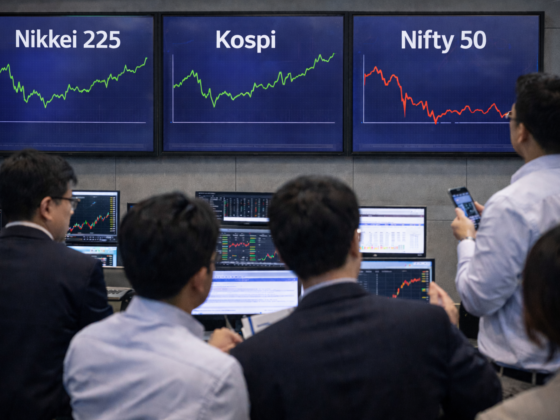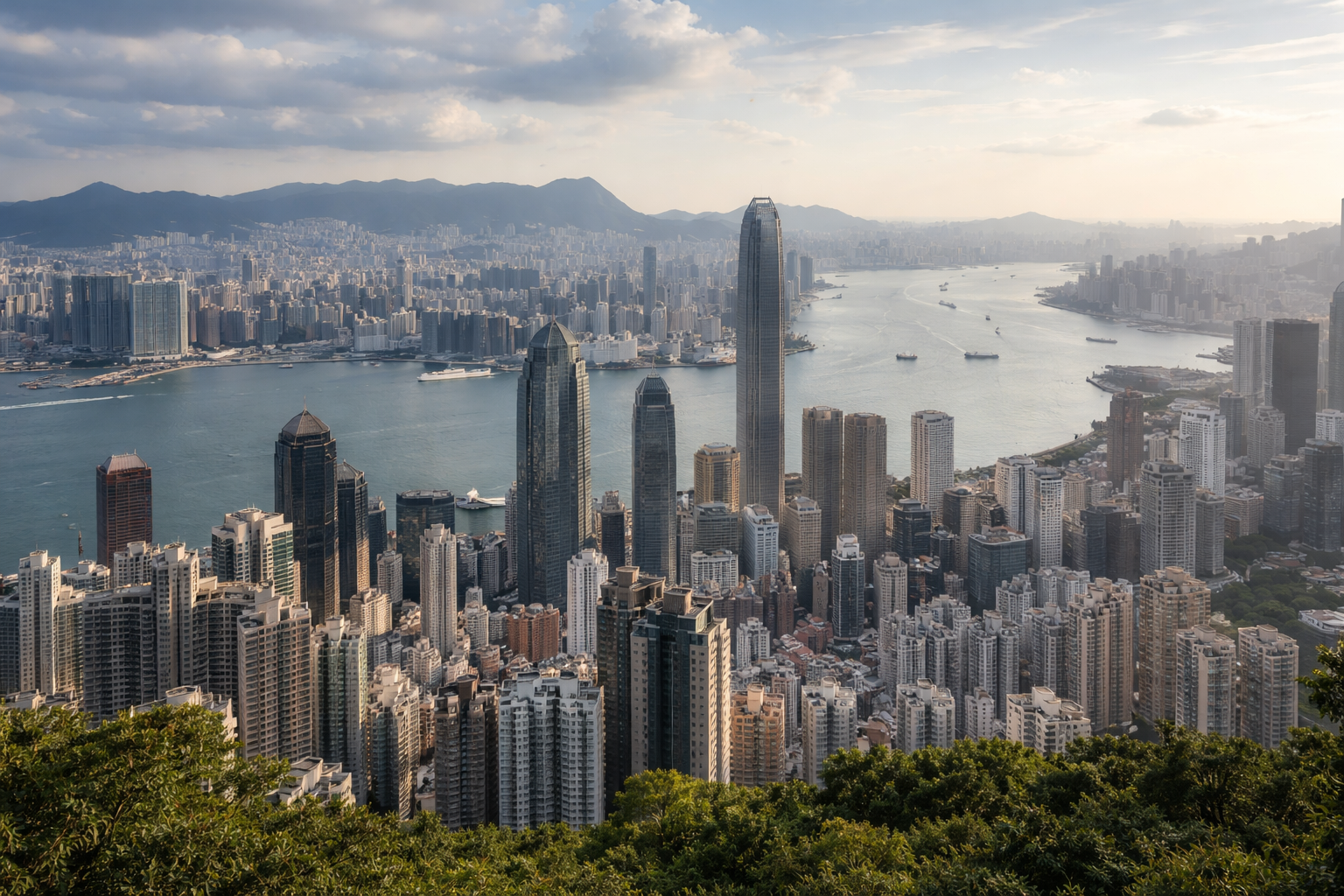
The Hang Seng Index slipped further into a correction, reaching its lowest level since July this year, as investors reacted to the latest Federal Reserve interest rate decision. It slipped to 24,468 points, down by over 11% from its highest point this year.
Hang Seng Index falls as headwinds rise
Hong Kong stocks are falling today, mirroring the performance of their American peers like the Dow Jones and Nasdaq 100, which slumped after the Federal Reserve delivered its interest rate decision.
The Fed decided to hike interest rates by 0.25% to between 3.75% and 4%, with officials hinting that they will deliver more hikes if inflation remains high. All signs are that inflation will be sticky for longer since crude oil prices have soared, with US diesel hitting a record high. Gasoline price is hovering above $4.3.
President Donald Trump reacted to the hike angrily, calling for the Fed to cut rates to 1%. He made a weird argument that the US should consider stopping trade with all countries that it has a trade deficit. His argument is that a trade deficit is similar to a loss and that the US would save over $1.95 trillion a year.
Most economists believe that Trump is wrong about his arguments on deficits, noting that the US economy benefits from more trade. For one, the country still exports goods and services worth over $3.4 trillion a year.
Therefore, the Hang Seng Index is likely falling because an escalation of his trade conflict would affect Chinese companies. China exports goods worth over $305 billion to the US a year. On the positive side, the US courts have helped to curb Trump’s extremes when it comes to tariffs.
The Hang Seng is also falling as tensions between the US and Iran escalate. Iran has refused to cave to Trump’s demands and is showing signs that it is comfortable escalating. At the same time, Saudi Arabia, which exports millions of barrels of oil to China, has seen its exports plunge after the closure of the East-West pipeline.
The sell-off in the Hang Seng Index has affected companies across sectors. Tencent, the biggest Chinese firm by market capitalization, dropped by 1.6%. Top banks like ICBC, HSBC, China Construction Bank, and Bank of China dropped by nearly 2%. Other large companies like PetroChina, Alibaba, and CNOOC were also in the red.
Hang Seng Index technical analysis
Hang Seng Index chart | Source: TradingView
The daily chart shows that the Hang Seng Index has come under pressure in the past few days. It has slipped from a high of 26,210 on August 4 to the current 24,473, its lowest level since July.
A closer look shows that it invalidated the forming bullish pennant pattern, which is made up of a vertical line and a triangle. It has moved below the lower side of the triangle and the 50-day Exponential Moving Average (EMA).
Therefore, the index will likely remain under pressure in the coming days, and possibly hit the support level of 24,000. On the positive side, it is slowly forming a doji candle, which may lead to a brief rebound.
The post Here’s why Hong Kong’s Hang Seng Index is tumbling today (Sep. 17) appeared first on Invezz